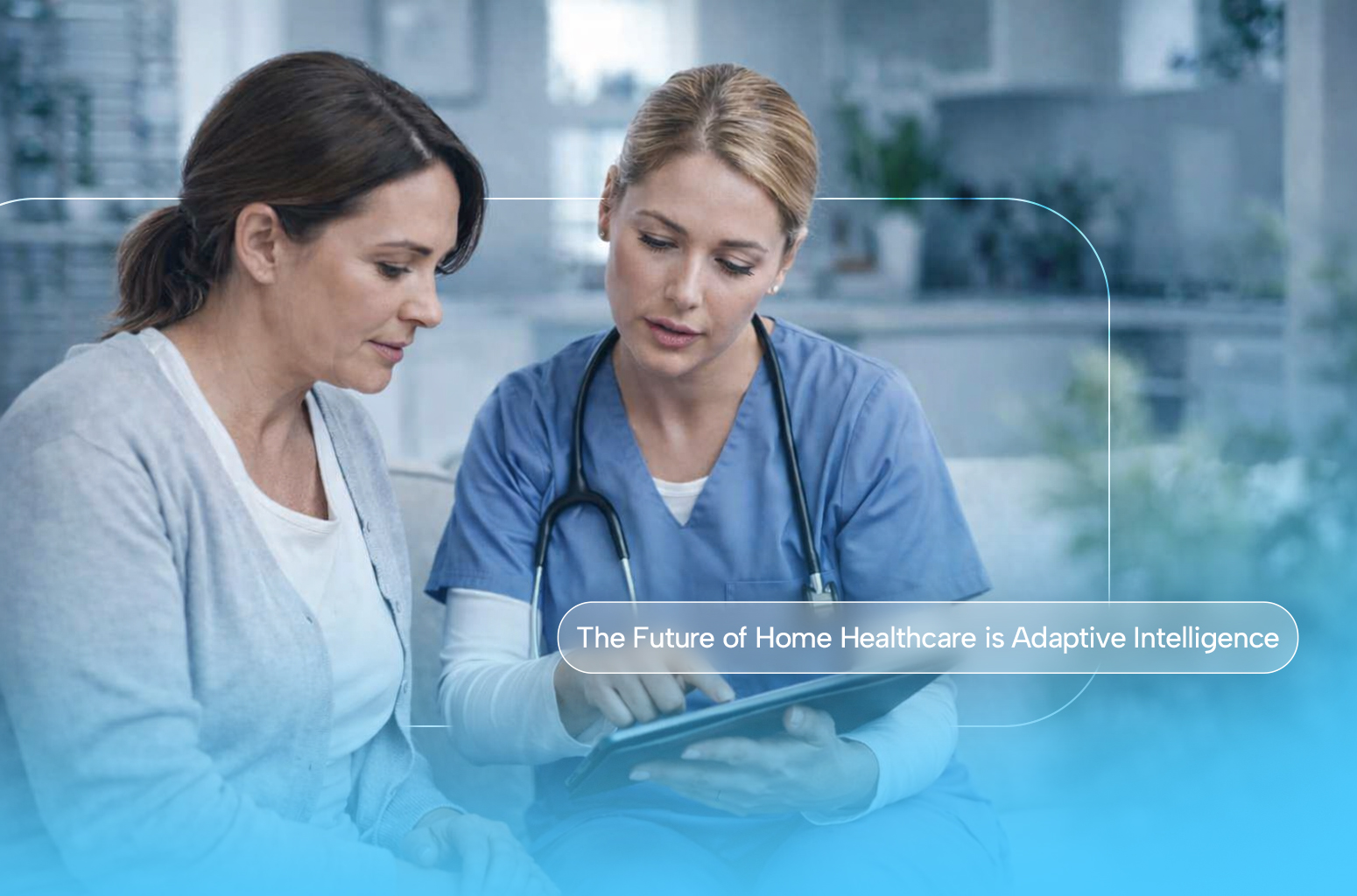
Home healthcare is becoming one of the fastest-growing areas of healthcare delivery.
Aging populations explain part of that growth, but they are not the whole story. Health systems are treating more patients at home after surgery. Chronic disease management is increasingly moving beyond hospitals. Pediatric care, infusion therapy, rehabilitation, and palliative care are also expanding outside traditional clinical settings.
That breadth is expanding. The World Health Organization projects that 1 of six people worldwide will be aged 60 years or older by 2030. At the same time, health systems are increasing the volume of care delivered at home, with McKinsey estimating that services representing as much as $265 billion in annual Medicare spending could eventually shift from traditional facilities into home-based settings for eligible patients. As the scope of home healthcare grows, so does the volume of clinical information attached to every patient journey.
Most digital platforms were designed to record care. The next phase requires technology that can interpret each patient journey on its own terms. A care plan for heart failure cannot be evaluated through the same lens as pediatric nursing. A post-operative recovery follows a different rhythm than long-term infusion therapy.
Bringing them together at the right moment is becoming one of the defining priorities for home healthcare industry.
The Industry Is Looking at Home Healthcare Differently
Home healthcare is receiving attention from policymakers, technology companies, and healthcare providers at the same time. This convergence simply directs care delivered at home is becoming a long-term priority rather than a temporary alternative.
Recent policy changes illustrate that shift. Beginning January 2027, the Centers for Medicare & Medicaid Services (CMS) will incorporate OASIS data from all payer types into portions of the Home Health Quality Reporting Program. Until now, those calculations relied only on Medicare and Medicaid data. The change significantly expands the volume of information used to evaluate home health quality across the U.S.
CMS has also extended the Acute Hospital Care at Home initiative through 2030 and recently released nearly five years of program data for researchers and health systems.
A concept that began as an emergency response during the pandemic is now generating long-term evidence on delivering hospital-level care in patients' homes.
Technology investment is following the same trajectory.
Earlier this year, Anthropic introduced Claude for Healthcare, a HIPAA-ready offering designed for healthcare providers, payers, and health technology organizations. Beyond clinical use cases, it supports workflows such as prior authorizations, clinical documentation, regulatory operations, and helping patients understand their health information.
Microsoft recently published findings from more than 500,000 de-identified health conversations with Copilot, offering one of the largest public datasets examining how people use conversational AI for health. Surprisingly, the use cases covered caregiver support, treatment guidance, provider navigation, and healthcare administration as well.
Simply said, home healthcare is becoming a richer information environment, shaped simultaneously by policy, clinical practice, and AI.
What is Adaptive Intelligence?
Home healthcare has traditionally been built around episodes of care. Referrals, assessments, clinician visits, documentation, and reimbursement formed the core of how providers delivered and evaluated care. That model is now being tested by a different set of expectations.
One of the clearest examples is the nationwide Expanded Home Health Value-Based Purchasing (HHVBP) Model. Medicare payments can increase or decrease by as much as 5% based on performance against quality measures such as avoidable hospitalizations, functional improvement, patient experience, and discharge to the community. The model now applies to Medicare-certified home health agencies across all 50 states, the District of Columbia, and U.S. territories.
Likewise, CMS is broadening the use of OASIS data across all payer types for portions of the Home Health Quality Reporting Program, placing greater emphasis on the results over the course of treatment instead of completion of clinical activities.
Those changes raise the bar for home healthcare providers.
Adaptive intelligence enters the picture because the question itself has changed.
It's the alternative: a continuously updating, patient-specific data and inference layer sitting on top of a unified longitudinal record. Every new OASIS assessment, RPM reading, clinician note, medication change, or therapy update gets ingested, resolved against everything already known about that patient, and used to update — not just append to — the picture of where they are right now. A heart-failure care plan and a pediatric nursing plan aren't evaluated against the same static rules; they're evaluated against each patient's own diagnosis, treatment goals, and expected recovery trajectory, recalculated as new data arrives rather than re-derived at the next scheduled review.
The Competitive Edge Lies in Understanding Patient Change
Home healthcare organizations are working with a broader range of clinical information than they did even a few years ago.
CMS has also expanded reporting expectations through OASIS, which now serves as the foundation to evaluate quality measures such as functional improvement, avoidable hospitalizations, emergency department use, and patient experience.
Clinical information will continue to grow. So will the expectations placed on home healthcare providers. The difference between high-performing organizations and everyone else will come from how confidently they prioritize patients, adjust care plans, and identify changes before they become avoidable complications.
The industry is still working through this complexity. While nearly 80% of Medicare-certified home health agencies use electronic health records, only 28% electronically exchange information with outside providers at the point of care, and just 18% integrate that information into clinical workflows.
Home Healthcare Now Gets a Different Clinical Lens with Adaptive Intelligence
Home healthcare has become too dynamic as it expands across chronic disease management, rehabilitation, infusion therapy, and post-acute care. This is why decision support must become as adaptive as the patients it serves.
Adaptive intelligence is built around that reality and it continuously evaluates patient information as new clinical observations become available.
Adaptive intelligence introduces something home healthcare has long needed: a dynamic clinical lens. This represents a broader shift in how home healthcare will be delivered over the next decade. Clinical intelligence is moving beyond documenting care toward continuously interpreting patient progress.
Building Adaptive Intelligence Into Home Healthcare
At Eucloid, we've found that adaptive intelligence isn't something organizations add after modernizing their data.
Every OASIS assessment, clinician note, medication update, remote monitoring feed, therapy record, and care plan adds another piece to a patient's clinical history; this ensures every new observation is understood alongside everything that came before it.
That philosophy shapes how we build adaptive intelligence. Instead of introducing another AI application, we embed a patient-specific clinical lens into the systems clinicians already use, allowing every new observation to be interpreted within the patient's broader clinical picture.
We applied the same thinking while modernizing BAYADA's enterprise data platform on Databricks. By bringing together more than 65 enterprise data sources into a governed Lakehouse, the organization established the data foundation required for patient-specific intelligence, advanced analytics, and future AI initiatives.
Looking Ahead
Adaptive intelligence marks a change in how home healthcare understands patients. The focus is shifting from documenting care to interpreting it through a patient-specific clinical lens that evolves with every stage of treatment.
At Eucloid, we're helping healthcare organizations modernize their data platforms to support this new generation of clinical intelligence. Get in touch with our experts to discuss your home healthcare modernization journey.