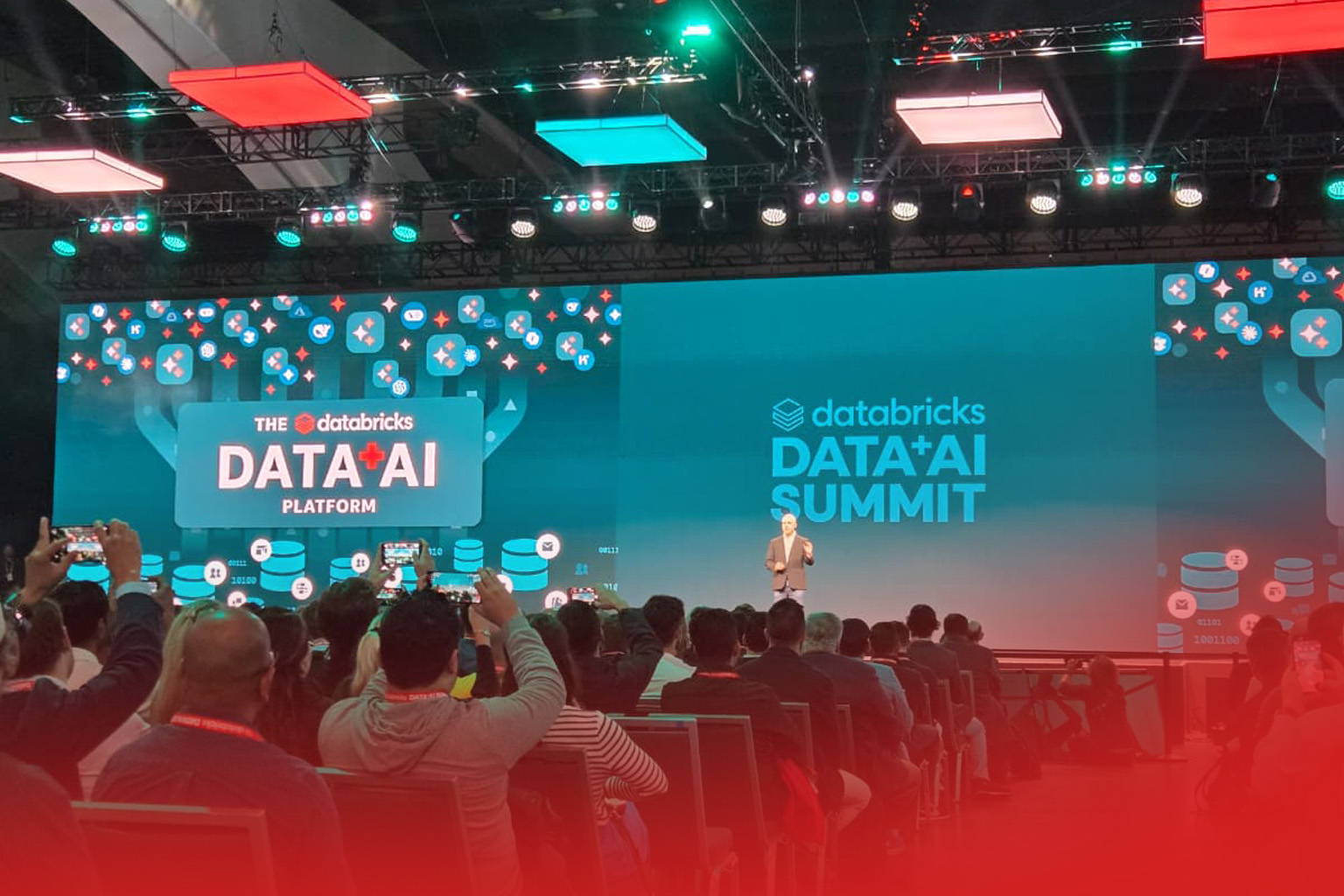
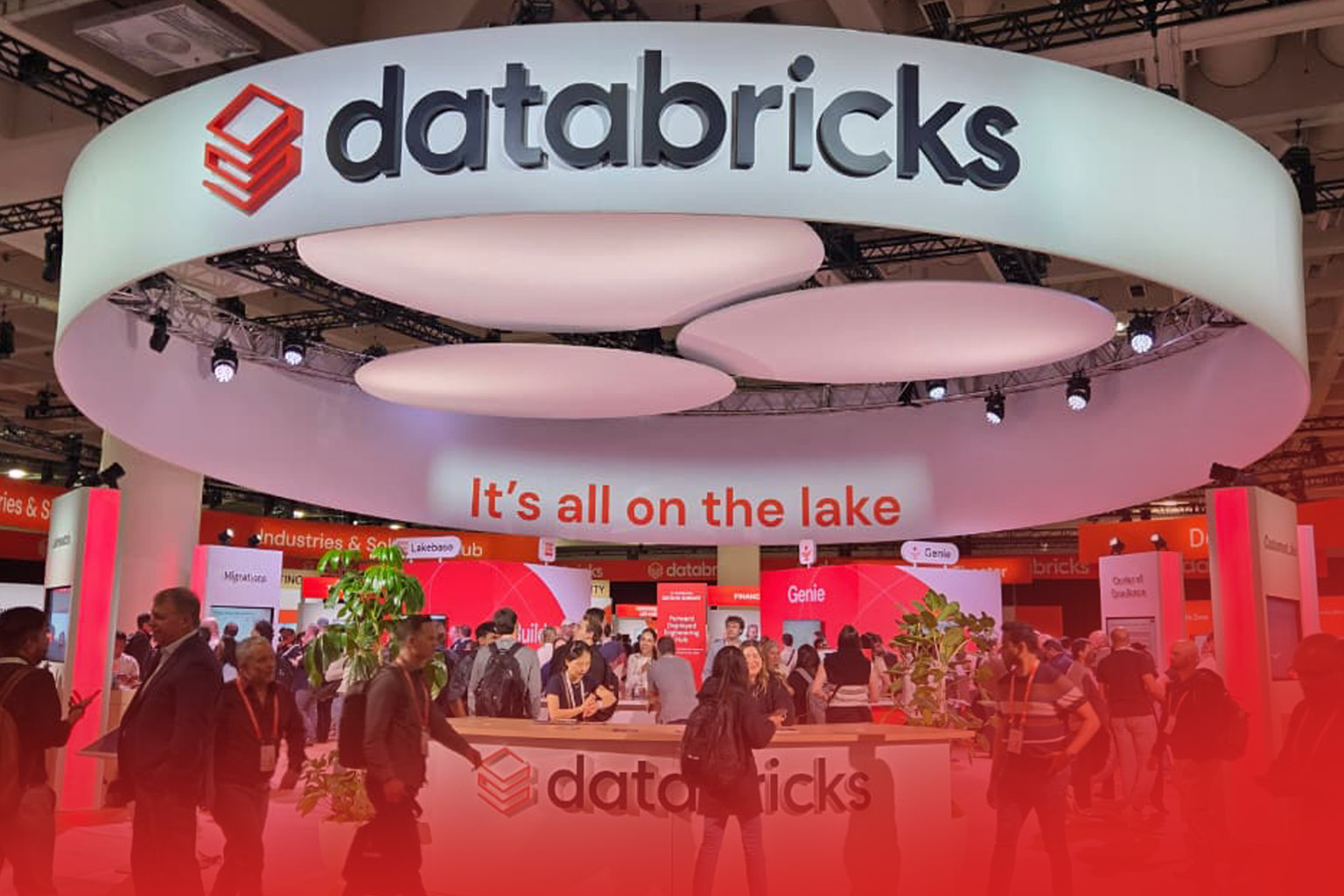
At DAIS 2026, Databricks introduced a series of announcements spanning AI coworkers, enterprise knowledge graphs, real-time serving, agentic marketing, and governed AI operations.
Genie One introduced an AI coworker capable of working across business applications and enterprise data. Genie Agents transformed prompts into autonomous workflows. Genie Ontology tackled one of enterprise AI's biggest challenges: context. Lakehouse//RT brought millisecond performance directly to the lakehouse, while CustomerLake introduced a new model for customer engagement powered by agents rather than campaigns.
Viewed individually, these look like product launches.
Viewed together, they reveal something much bigger.
Enterprise AI won't run on a single application
 Enterprise work has never happened in one place.
A customer conversation starts in email, moves to Slack, becomes a ticket, triggers an update in CRM, and eventually appears in a dashboard or report. The challenge isn't accessing one system. It's moving across all of them without losing context along the way.
This is where Databricks' investments in MCP and Unity Catalog become particularly important.
MCP gives agents and assistants a common way to connect with business applications and tools, while Unity Catalog ensures those interactions continue to respect existing permissions, policies, and governance rules.
Instead of building a new access model every time a new assistant or agent enters the environment, organizations can increasingly rely on a common foundation for identity, access, and lineage across systems.
As enterprises adopt more agents, more assistants, and more AI applications, interoperability may become just as important as intelligence itself.
AI finally has access to business context
For years, enterprise AI has struggled with a problem that most businesses know all too well: the information required to answer a question rarely lives in one place.
Definitions are scattered across dashboards, SQL queries, documentation, support tickets, and tribal knowledge that exists only inside teams. Two reports can use the same metric and mean entirely different things. Customer records exist across CRMs, support systems, marketing platforms, and operational databases. Without that context, even the best models are left guessing.
Genie Ontology was one of the most interesting announcements from DAIS because it tackled this problem directly. Rather than treating context as something users manually provide in prompts, Databricks is attempting to create a continuously evolving understanding of how an organization actually works — its business definitions, relationships, trusted sources, and institutional knowledge.
Using Ontology, Genie answered 84.5% of enterprise data questions correctly on the first attempt.
The strongest general-purpose coding agent in the same benchmark achieved 52.4%.
More interestingly, Genie delivered those answers 2× faster.
“More than one million Genie Spaces have already been created by customers,” shared Databricks during their Genie announcements.
However, organizations aren't using AI primarily to generate content. Rather, they're using it to ask questions about their business.
Genie Agents are the next step in that journey.
Instead of creating spaces around topics, teams can now create agents that monitor metrics, generate reports, prepare meeting briefs, and execute workflows using the same context already available inside the lakehouse.
Operational analytics returns to the lakehouse
The promise behind agents sounds simple until the first workflow reaches production.
An agent waiting seconds for customer data is frustrating.
An agent waiting minutes is unusable.
This is why Lakehouse//RT may end up being one of the most important infrastructure announcements from DAIS.
Preview customers reported response times as low as 10 milliseconds on smaller datasets and sub-100 millisecond responses on larger workloads.
The push toward agents introduces a challenge that traditional analytics systems were never designed to solve: latency.
Databricks also reported 12,000 queries per second while maintaining low latency.
A dashboard refreshing every hour may be acceptable for reporting. It is less acceptable when an agent is monitoring fraud signals, personalizing customer experiences, optimizing inventory decisions, or triggering operational workflows.
This is where Lakehouse//RT stood out.
By bringing millisecond performance directly to open lakehouse data, Databricks is effectively removing one of the biggest reasons organizations maintained separate serving databases, caching layers, and duplicated pipelines.
In preview environments, customers saw as much as 16× better performance than existing real-time serving architectures.
The implications extend well beyond performance benchmarks. As more enterprise decisions become automated, freshness becomes part of accuracy.
Marketing may become the first truly agentic function
Extracting value from customer data remains one of the hardest challenges in marketing. Most enterprises still operate across fragmented identities, stale audiences, and long queues of data requests. Golden customer records can take months to build and unify, and every new martech tool creates another place where sensitive customer data must be copied, secured, and governed.
At the same time, marketing is entering a new era. AI is raising the bar for customer engagement — consumers are beginning to use agents to browse, compare, and make decisions on their behalf in seconds. To keep up, marketers need to engage customers faster, across more channels, and with greater personalization.
CustomerLake was Databricks' response to this shift.
Instead of treating campaigns as isolated projects, CustomerLake introduces Profile Agents and Campaign Agents that continuously build customer understanding, identify opportunities, recommend actions, and optimize engagement around business goals.
The operating model changes from campaign execution to objective management.
Marketing often becomes the proving ground for new technologies because the feedback loop is immediate. If agentic systems succeed here, other enterprise functions are unlikely to be far behind.
Trust becomes a product requirement
A chatbot giving the wrong answer is frustrating.
An agent taking the wrong action is expensive.
That difference explains why governance appeared underneath almost every major announcement at DAIS 2026.
CustomerLake runs on governed customer data rather than exported copies. Genie respects existing permissions. AI Gateway controls which models, tools, and systems agents are allowed to use.
The interesting part of DAIS for us wasn't seeing more AI. It was seeing Databricks spend time on the things that usually slow AI projects down once they leave the demo stage. The customer record isn't where you expected it to be. Two teams use the same metric differently. The data is right, but it arrived too late to matter. The model works, but nobody is comfortable letting it do anything yet. A lot of this year's announcements felt aimed directly at those problems.
, says Anuj Gupta, Co-founder at Eucloid Data Solutions. He further adds, "The more capable these systems become, the more important it becomes that they understand not only what they can do, but what they are allowed to do."
AI is moving into the places where work already happens
One of the more subtle themes running through DAIS 2026 was the disappearance of the interface itself.
Databricks' decision to bring Genie into Slack, Teams, mobile apps, and existing assistant experiences may be just as significant as the technology itself. The interaction model is shifting from opening another application to simply asking a question in the middle of a conversation or task and getting an answer in context.
The most successful AI experiences over the next few years may be the ones users barely notice they're using.
Our Take
With Genie One, Genie Agents, Genie Ontology, Lakehouse//RT, and CustomerLake, Databricks is bringing enterprise AI into its next phase — one where business context, governance, real-time intelligence, and agentic execution come together on a single data foundation.
At Eucloid, we're already helping organizations build the foundations required for this shift through modern data platforms, conversational analytics experiences, governed AI solutions, and customer intelligence systems built on Databricks.
Connect with us to explore what that could look like for your organization.